

Power stations around 1,000 Wh
The most-bought capacity there is, and the band where output rather than battery decides what you get.
Every figure here is taken from the manufacturer’s published listing and measured against the rest of the group. We do not test power stations. Where a listing is silent, this site prints not stated rather than a plausible default.
What this group looks like
| Measure | Middle half | Median |
|---|---|---|
| Capacity | 960 Wh – 1,024 Wh | 1,000 Wh |
| Continuous output | 1,000 W – 1,800 W | 1,200 W |
| Runtime at full output (derived) | 34 min – 1h 0m | 58 min |
| Energy per kilogram (derived) | — | 88 Wh/kg |
The middle-half column spans the 25th to 75th percentile, so it describes where most of this group sits rather than being pulled about by one unusual unit.
The runtime figure is arithmetic, and it is optimistic. It is the published capacity divided by the published output, which is the best you could ever get. Real inverters are 85 to 90% efficient, so the usable figure is lower — and no listing on this site states its inverter efficiency, so we do not estimate it. Treat the number as a ceiling and a way to compare like with like, not as a promise.
Against the market as a whole this group runs longer at full output than average — a median of 58 min against 51 min overall, a difference of 14%.
What these listings publish
Specification coverage is uneven, and knowing where it runs out is part of shopping honestly.
| Specification | Stated | Share |
|---|---|---|
| Continuous output | 40 | 100% |
| Capacity in watt-hours | 40 | 100% |
| Surge rating | 25 | 63% |
| Cell chemistry | 27 | 68% |
| Solar input | 23 | 57% |
| Weight | 31 | 78% |
What they cost
Bands, not prices. Panels, where you need them, are almost always a separate purchase.
| Band | Listings | Share |
|---|---|---|
| Under $200 | 2 | 5% |
| $200–400 | 20 | 50% |
| $400–800 | 17 | 43% |
| $800–1,500 | 1 | 3% |
A thousand watt-hours is a night, not a weekend
It is a CPAP through the night with margin, a fridge through a short outage given cycling, a laptop many times over. It is not a kettle more than a handful of times, and it is not a space heater at all. The capacity is the easy part of this band; the output ceiling is what separates the machines.
Two stations of the same capacity can be different products
At this size the range of output ratings is wide — from a few hundred watts to well over a kilowatt on the same battery. Read the continuous rating against the largest thing you need to start, and the surge rating against its startup draw, before comparing watt-hours at all.
What a kilowatt-hour actually runs
At this capacity the arithmetic gets useful. A typical fridge averaging well under a hundred watts runs for the better part of a day; a laptop for a working week; a CPAP for several nights. What it does not do is anything that heats: a kettle, a toaster or a hair dryer will run for minutes rather than hours, because heating elements draw more in ten minutes than a fridge does in an afternoon. The dividing line is not the device but whether its job is to make heat.
Output matters more than capacity at this size
Stations at this capacity vary widely in continuous output, and the output is what decides whether a device runs at all. A station with a kilowatt-hour of storage and a modest inverter is a long-lasting supply for small loads; one with the same storage and a large inverter is a short-lived supply for big ones. Neither is better, and the listing headline is almost always the capacity, which is the number that matters second.
The weight at which carrying stops being casual
Median weight in this band is enough that most people carry the station with two hands and put it down deliberately. That is still portable in the sense that it goes in a car boot and comes out at the other end, and it is not portable in the sense of being walked to a pitch. Where the station will be moved on foot, the capacity below this one is the honest choice, and where it will be moved by vehicle the weight barely matters.
The durability claim nobody has to honour
Cycle life is the number quoted everywhere in marketing and stated in no listing here in a form that can be compared. The figure comes from the cell maker rather than the station builder and assumes a regime no owner follows. The warranty is the substitute worth reading, because it is the only durability claim the seller has to pay for if it turns out to be wrong, and at this capacity the station is expensive enough for the difference between one year and five to be a real part of the price.
Charging it back up
A kilowatt-hour takes a while to replace and mains recharge rates differ far more between models at this size than capacity does. Some stations fill in an hour or two; others take most of a day from the same wall socket. For a unit used at weekends the slow one is fine. For one used as outage cover it decides whether it is ready for the next interruption, and fast charging generally means audible fans while it happens. The figure is usually published, and it is rarely the one the listing leads with.
Running two things at once
Loads add in watts and divide the watt-hours, and the two behave differently. Two devices drawing three hundred watts each need a station rated above six hundred watts continuous or neither runs, however much capacity is in the pack. The same pair also empties the battery in half the time a single one would. People generally remember the second rule and forget the first, which is why a station bought on capacity for a known set of devices sometimes cannot run them simultaneously at all.
Before you buy
Check watts before watt-hours
A station rated below your appliance’s draw will not start it for one second, whatever its battery holds. Establish the output ceiling you need first; the capacity question only matters once the appliance runs at all.
Find the surge rating
Anything with a motor or compressor draws several times its running wattage for a fraction of a second at startup. Where a listing does not state a surge rating, this site says so rather than assuming it is generous.
Treat marketing language as a claim
“Solar generator”, “whole-home backup” and “portable” are positioning, not specifications. Look for the number behind each: a solar input in watts, an output in watts, a weight in kilograms.
Compare them
The finder below is already filtered to this group. Every result carries its runtime at full output.
77 power stations match

UDPOWER S1200 1190Wh Solar Generator Kit with 120W Panel, 1200W Power Station, for Home Backup RV Outdoor, Emergency Power Backup
- At full output
- 60min
- Continuous output
- 1200W
- Surge
- 1800W
- Cells
- LiFePO4
- Solar input
- 120W
- Weight
- 26lb
Capacity
1,190Wh
Appliance · 500 – 1,200 Wh · 40 power stations
Energy per kilogram
102Wh per kg
+15% vs the 88 median — more energy for the weight than most of its class
Capacity is +19% against the class median of 1,000.
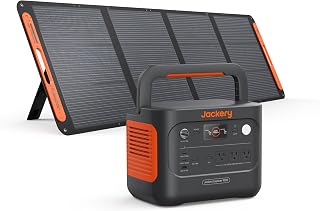
Jackery Solar Generator 1000 v2 and 200W Solar Panel,1070Wh,1500W AC
- At full output
- 43min
- Continuous output
- 1500W
- Surge
- 3000W
- Cells
- LiFePO4
- Solar input
- 200W
- Weight
- 24lb
Capacity
1,070Wh
High output · 500 – 1,200 Wh · 40 power stations
Energy per kilogram
99Wh per kg
+12% vs the 88 median — more energy for the weight than most of its class
Capacity is +7% against the class median of 1,000.
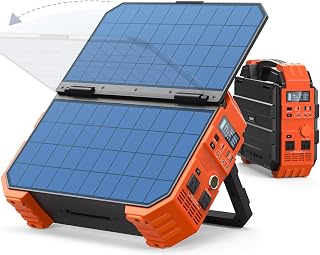
BLAVOR Portable Power Station 1600W (Peak 3200W), Built-in Solar Panel, 1024Wh LiFePO4 Battery, 100W USB-C Fast Charge, Solar Generator for Home Backup, Camping, Power Outages & RV
- At full output
- 38min
- Continuous output
- 1600W
- Surge
- 3200W
- Cells
- LiFePO4
- Solar input
- 40W
- Weight
- 26lb
Capacity
1,024Wh
High output · 500 – 1,200 Wh · 40 power stations
Energy per kilogram
87Wh per kg
-2% vs the 88 median — typical for its class
Capacity is +2% against the class median of 1,000.

VTOMAN FlashSpeed 1000 Portable Power Station, 828Wh LiFePO4,1000W output
- At full output
- 50min
- Continuous output
- 1000W
- Surge
- 2000W
- Cells
- LiFePO4
- Solar input
- 400W
- Weight
- 32lb
Capacity
828Wh
Appliance · 500 – 1,200 Wh · 40 power stations
Energy per kilogram
58Wh per kg
-35% vs the 88 median — heavier than most of its class for the energy
Capacity is -17% against the class median of 1,000.

DaranEner Portable Power Station 600W (1200W Peak), 576Wh LiFePO4 battery with 100W Solar Panel, Fast Recharge AC/Car/Solar, 3 AC Outlets, USB-C PD for Camping, RV, CPAP, Emergency Backup
- At full output
- 58min
- Continuous output
- 600W
- Surge
- 1200W
- Cells
- LiFePO4
- Solar input
- 100W
- Weight
- 14lb
Capacity
576Wh
Appliance · 500 – 1,200 Wh · 40 power stations
Energy per kilogram
93Wh per kg
+5% vs the 88 median — typical for its class
Capacity is -42% against the class median of 1,000.

Jackery Explorer 1000 v2 Portable Power Station,1070Wh,1500W
- At full output
- 43min
- Continuous output
- 1500W
- Surge
- 3000W
- Cells
- LiFePO4
- Solar input
- not stated
- Weight
- 24lb
Capacity
1,070Wh
High output · 500 – 1,200 Wh · 40 power stations
Energy per kilogram
99Wh per kg
+12% vs the 88 median — more energy for the weight than most of its class
Capacity is +7% against the class median of 1,000.

BROWEY 1600W (3200W Peak) Portable Power Station, 1024Wh LiFePO4 Battery with Built-in Solar Panel, 100W USB-C PD, Solar Generator for Camping, RV, Home Backup, Emergency
- At full output
- 38min
- Continuous output
- 1600W
- Surge
- 3200W
- Cells
- Lithium-ion
- Solar input
- 40W
- Weight
- 26lb
Capacity
1,024Wh
High output · 500 – 1,200 Wh · 40 power stations
Energy per kilogram
87Wh per kg
-2% vs the 88 median — typical for its class
Capacity is +2% against the class median of 1,000.

EF ECOFLOW Portable Power Station Delta 3 Classic, 1024Wh 1800W AC
- At full output
- 34min
- Continuous output
- 1800W
- Surge
- 3600W
- Cells
- LiFePO4
- Solar input
- 500W
- Weight
- 27lb
Capacity
1,024Wh
High output · 500 – 1,200 Wh · 40 power stations
Energy per kilogram
85Wh per kg
-4% vs the 88 median — typical for its class
Capacity is +2% against the class median of 1,000.
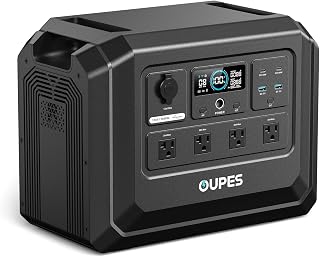
OUPES Mega 1 Lite Portable Power Station 1024Wh 2000W (4500W Surge)
- At full output
- 31min
- Continuous output
- 2000W
- Surge
- 4500W
- Cells
- not stated
- Solar input
- 800W
- Weight
- 27lb
Capacity
1,024Wh
High output · 500 – 1,200 Wh · 40 power stations
Energy per kilogram
85Wh per kg
-4% vs the 88 median — typical for its class
Capacity is +2% against the class median of 1,000.

1000W Portable Power Station 1024Wh LiFePO4 for Outdoor & Home
- At full output
- 61min
- Continuous output
- 1000W
- Surge
- not stated
- Cells
- LiFePO4
- Solar input
- 200W
- Weight
- 28lb
Capacity
1,024Wh
Appliance · 500 – 1,200 Wh · 40 power stations
Energy per kilogram
82Wh per kg
-8% vs the 88 median — typical for its class
Capacity is +2% against the class median of 1,000.

1000W Portable Power Station 1024Wh LiFePO4 for Outdoor & Home
- At full output
- 61min
- Continuous output
- 1000W
- Surge
- not stated
- Cells
- LiFePO4
- Solar input
- 200W
- Weight
- 28lb
Capacity
1,024Wh
Appliance · 500 – 1,200 Wh · 40 power stations
Energy per kilogram
82Wh per kg
-8% vs the 88 median — typical for its class
Capacity is +2% against the class median of 1,000.

N1000 Portable Power Station for Camping, 1024Wh, 1800W
- At full output
- 34min
- Continuous output
- 1800W
- Surge
- 3000W
- Cells
- LiFePO4
- Solar input
- not stated
- Weight
- 26lb
Capacity
1,024Wh
High output · 500 – 1,200 Wh · 40 power stations
Energy per kilogram
88Wh per kg
0% vs the 88 median — typical for its class
Capacity is +2% against the class median of 1,000.
Related
- The full power station finder — unfiltered, every output class.
- How long does a power station actually run? — the full table.
- How we compile these figures.