
Power station guides, one page per model
Every station here has been measured against the median for its own output class, and every one shows the runtime its two headline figures imply — the number the listing leaves for you to work out.
These pages exist because a specification means little on its own. A 2,000 Wh station is not simply better than a 1,000 Wh one; if both are rated 1,000 W continuous they will run exactly the same appliances, one of them for twice as long, and the difference in price is rarely a factor of two. Each guide puts one station against the rest of its class and shows both figures, plus the runtime they imply together.
We do not test power stations. Every figure is read from the manufacturer’s listing, every runtime figure is arithmetic on the published capacity and output, and where a listing is silent the page says not stated.
All 37 guides
Essentials Power Stations
| Station | Capacity | Output | Runtime at full output |
|---|---|---|---|
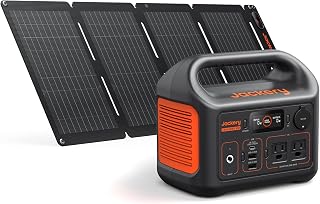 Jackery Solar Generator 300 and 40W Jackery Solar Generator 300 and 40W |
292 Wh | 300 W | 58 min |
High-Output Power Stations
| Station | Capacity | Output | Runtime at full output |
|---|---|---|---|
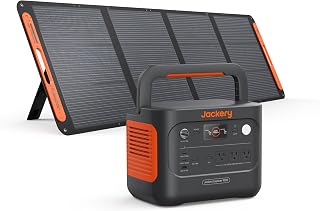 Jackery Solar Generator 1000 v2 Jackery Solar Generator 1000 v2 |
1,070 Wh | 1,500 W | 43 min |
 BROWEY 1600W (3200W Peak) Portable BROWEY 1600W (3200W Peak) Portable |
1,024 Wh | 1,600 W | 38 min |
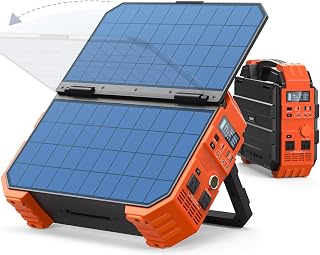 BLAVOR Portable Power Station 1600W BLAVOR Portable Power Station 1600W |
1,024 Wh | 1,600 W | 38 min |
 EF ECOFLOW Portable Power Station EF ECOFLOW Portable Power Station |
1,024 Wh | 1,800 W | 34 min |
 Anker SOLIX S2000 Portable Power Anker SOLIX S2000 Portable Power |
2,000 Wh | 1,500 W | 1h 20m |
 UDPOWER S2400 Portable Power UDPOWER S2400 Portable Power |
2,083 Wh | 2,400 W | 52 min |
 2400W Portable Power Station 2400W Portable Power Station |
1,843 Wh | 2,400 W | 46 min |
 BLUETTI AC70 Portable Power Station BLUETTI AC70 Portable Power Station |
768 Wh | 2,000 W | 23 min |
 EF ECOFLOW Delta 3 Portable Power EF ECOFLOW Delta 3 Portable Power |
5,000 Wh | 1,800 W | 2h 47m |
 Dabbsson 1008Wh Solar Dabbsson 1008Wh Solar |
1,000 Wh | 1,600 W | 38 min |
 BLUETTI Elite 100 V2 Portable Power BLUETTI Elite 100 V2 Portable Power |
1,000 Wh | 1,800 W | 33 min |
 BLUETTI Solar Generator Elite 300 BLUETTI Solar Generator Elite 300 |
3,000 Wh | 2,400 W | 1h 15m |
 Jackery HomePower 2000 Plus v2 Jackery HomePower 2000 Plus v2 |
12,000 Wh | 2,200 W | 5h 27m |
 ABOK Ark2000 1536Wh 2000W Power ABOK Ark2000 1536Wh 2000W Power |
3,000 Wh | 2,000 W | 1h 30m |
 PECRON F1000LFP Power PECRON F1000LFP Power |
960 Wh | 1,500 W | 38 min |
Home Backup Power Stations


What is in each guide
The same six things, in the same order, so two guides can be read against each other without hunting for the figure that moved. First, everything the listing publishes, in one table — capacity, continuous output, surge, chemistry, weight, solar input and price band. Alongside them sit the two figures that are not on any listing: the runtime those first two imply, and the energy the station carries per kilogram.
Second, that runtime worked out in the open, and then divided into loads people actually own rather than left at the rated ceiling. The ceiling is the right number for comparing two stations and the wrong number for anyone with a fridge in mind, so the page gives both and says which is which.
Third, the station against its own class. Every figure is put beside the median for its output class, which is what turns a specification into information: 500 W means nothing until you know that the essentials class runs to 600 W by definition, and 90 Wh/kg means nothing until you know what the rest of the class carries.
Fourth and fifth, the conditions under which the station suits and the conditions under which it does not — both derived from published specifications rather than from an opinion. Sixth, what the listing claims and, as importantly, what it leaves out.
What these guides are not
They are not reviews. Nothing here has been unboxed, charged, discharged or carried anywhere, and no station on this site has been run against a load by anyone. There is no score, no ranking and no best buy, because none of those can be produced honestly from listing text alone. What can be produced honestly is a comparison against every other listing in the same class, and that is what these pages are.
They are also not a substitute for the class pages. If you are still deciding between a station that will run a fridge and one that will not, the class comparison is the better starting point — it shows the whole distribution rather than one point in it. These guides are for the stage after that, when the decision has narrowed to a particular unit and the question has become what this one will actually do.
Where a listing is silent, the guide says not stated. That is a deliberate refusal to fill a gap with a plausible default, and a guide with several such gaps is describing a listing that documents itself poorly — which is itself worth knowing before buying.
Which stations get a guide, and which do not
Not every listing in the corpus can carry one. A guide is worth writing only where the listing publishes enough to compare, and in particular where it states both a capacity and a continuous output — without that pair the runtime cannot be derived, and the section these pages are built around has nothing to say. Roughly a fifth of the corpus states an output and no capacity at all. Those stations are still in the finder and still counted in every class median on this site; they simply do not get a page of their own, because the page would be mostly the words not stated.
The corpus behind all of this holds 170 stations. Specification coverage across them is uneven and the guides show it rather than hiding it: an output figure appears on almost every listing, a capacity on about three quarters, a surge rating on roughly half, and a solar input figure on about half. A station that documents itself well is not thereby a better station, but it is one you can make an informed decision about, and the difference between those two things is most of what this site exists to show.
Prefer to compare a whole class?
- Essentials Power Stations — the full class, with baselines for every specification.
- Appliance Power Stations — the full class, with baselines for every specification.
- High-Output Power Stations — the full class, with baselines for every specification.
- Home Backup Power Stations — the full class, with baselines for every specification.
- The full power station finder — unfiltered, every class.
- How long will a power station actually run? — the arithmetic, and where it misleads.