

How long does a power station actually run?
Capacity divided by output, for every station on this site. The answer is more consistent — and shorter — than the marketing suggests.
Every figure here is taken from the manufacturer’s published listing and measured against the rest of the group. We do not test power stations. Where a listing is silent, this site prints not stated rather than a plausible default.
What this group looks like
| Measure | Middle half | Median |
|---|---|---|
| Capacity | 288 Wh – 2,048 Wh | 1,024 Wh |
| Continuous output | 300 W – 2,400 W | 1,024 W |
| Runtime at full output (derived) | 42 min – 1h 1m | 51 min |
| Energy per kilogram (derived) | — | 88 Wh/kg |
The middle-half column spans the 25th to 75th percentile, so it describes where most of this group sits rather than being pulled about by one unusual unit.
| Output class | Listings | Median capacity | Median output | Runtime at full output |
|---|---|---|---|---|
| Essentials Power Stations | 64 | 231 Wh | 300 W | 52 min |
| Appliance Power Stations | 25 | 999 Wh | 1,000 W | 1h 0m |
| High-Output Power Stations | 46 | 1,843 Wh | 2,000 W | 46 min |
| Home Backup Power Stations | 33 | 3,600 Wh | 3,600 W | 51 min |
The runtime figure is arithmetic, and it is optimistic. It is the published capacity divided by the published output, which is the best you could ever get. Real inverters are 85 to 90% efficient, so the usable figure is lower — and no listing on this site states its inverter efficiency, so we do not estimate it. Treat the number as a ceiling and a way to compare like with like, not as a promise.
Against the market as a whole this group runs about as long at full output as average — a median of 51 min against 51 min overall.
What these listings publish
Specification coverage is uneven, and knowing where it runs out is part of shopping honestly.
| Specification | Stated | Share |
|---|---|---|
| Continuous output | 168 | 99% |
| Capacity in watt-hours | 133 | 78% |
| Surge rating | 89 | 52% |
| Cell chemistry | 123 | 72% |
| Solar input | 87 | 51% |
| Weight | 127 | 75% |
What they cost
Bands, not prices. Panels, where you need them, are almost always a separate purchase.
| Band | Listings | Share |
|---|---|---|
| Under $200 | 62 | 36% |
| $200–400 | 30 | 18% |
| $400–800 | 38 | 22% |
| $800–1,500 | 22 | 13% |
| Over $1,500 | 18 | 11% |
The finding, first
Across every output class on this site the median station runs about fifty minutes at its own rated output. Not the small ones for less and the large ones for more: about the same, because capacity and output rise together as you go up the range. A bigger station does not buy a longer run at full tilt. It buys the ability to run more things, or bigger things, for about the same hour. Only in the largest capacity band, where batteries are sized for endurance rather than peak draw, does that break — and there the median runs over three hours.
Why the two numbers on the box mislead
A station advertises watts and watt-hours side by side and explains neither. Watts are a ceiling: below an appliance’s draw, the station will not start it for one second whatever the battery holds. Watt-hours are a budget: they say how long, once running. Buyers routinely solve a watts problem by buying watt-hours, which does not work and is expensive.
How to use the figure
Divide your ACTUAL load into the capacity rather than the rated output. A 1,000 Wh station running a 60 W fridge cycle is not doing an hour, it is doing most of a day. The runtime figure on each result is the full-output case, which is the worst case and the only one that compares like with like.
It is arithmetic, and it is optimistic
Published capacity divided by published output is the best you could ever get. Real inverters lose 10 to 15% turning DC into AC, and not one listing in this corpus states its inverter efficiency — so we do not estimate it. Read the number as a ceiling.
Where the missing watt-hours go
Runtime is capacity divided by draw, and the answer is always optimistic. The inverter converting DC to mains loses a share as heat, typically something like a tenth. Most stations reserve part of the pack rather than discharging it flat, because running a lithium cell to zero shortens its life. Between them, planning on around eighty per cent of the nameplate capacity is closer to what is delivered, and that adjustment matters more than the difference between two stations of similar size.
Why the manufacturer’s runtime figures look generous
Published runtimes are usually calculated rather than measured, at a constant draw, at room temperature, on a new pack. Real loads are not constant: a fridge cycles, a laptop varies with what it is doing, and a power tool draws in bursts. A cycling load also keeps the inverter running through its idle periods, and inverter idle draw is a real and rarely stated cost — enough to empty a small station over a long enough period with nothing plugged in doing anything.
Doing the arithmetic before buying
Take the running watts of what you want to power, add the hours you want it for, and multiply. Then add a quarter for conversion and reserve. That number is the capacity to shop for, and it is separate from the continuous output rating, which must independently exceed the running watts and whose surge must exceed the starting draw. Two devices at once means adding the watts, not the watt-hours, and it is the addition people forget.
Measuring what you actually draw
The arithmetic here is only as good as the wattage that goes into it, and most people take that number from a label describing the maximum the device can draw rather than what it usually does. A plug-in energy meter costs very little and turns a guess into a measurement, and the answer is frequently far below the label — a fridge rated at a few hundred watts averages a fraction of that across a day because the compressor is off most of the time. Measuring the actual load is the single change that makes every other figure on this page useful.
Before you buy
Check watts before watt-hours
A station rated below your appliance’s draw will not start it for one second, whatever its battery holds. Establish the output ceiling you need first; the capacity question only matters once the appliance runs at all.
Find the surge rating
Anything with a motor or compressor draws several times its running wattage for a fraction of a second at startup. Where a listing does not state a surge rating, this site says so rather than assuming it is generous.
Treat marketing language as a claim
“Solar generator”, “whole-home backup” and “portable” are positioning, not specifications. Look for the number behind each: a solar input in watts, an output in watts, a weight in kilograms.
Compare them
The finder below is already filtered to this group. Every result carries its runtime at full output.
170 power stations match

UDPOWER S2400 Portable Power Station(Solar Panel Option), 2083Wh LiFePO4, 2400W (Surge 3000W) UPS, 6 AC Outlets, Solar Generator for RVs Camping Emergency, Home Backup (One Unit(AS2400))
- At full output
- 52min
- Continuous output
- 2400W
- Surge
- 3000W
- Cells
- LiFePO4
- Solar input
- 440W
- Weight
- 41lb
Capacity
2,083Wh
High output · 1,200 – 2,500 Wh · 20 power stations
Energy per kilogram
112Wh per kg
+31% vs the 86 median — more energy for the weight than most of its class
Capacity is +3% against the class median of 2,016.

UDPOWER S1200 1190Wh Solar Generator Kit with 120W Panel, 1200W Power Station, for Home Backup RV Outdoor, Emergency Power Backup
- At full output
- 60min
- Continuous output
- 1200W
- Surge
- 1800W
- Cells
- LiFePO4
- Solar input
- 120W
- Weight
- 26lb
Capacity
1,190Wh
Appliance · 500 – 1,200 Wh · 40 power stations
Energy per kilogram
102Wh per kg
+15% vs the 88 median — more energy for the weight than most of its class
Capacity is +19% against the class median of 1,000.
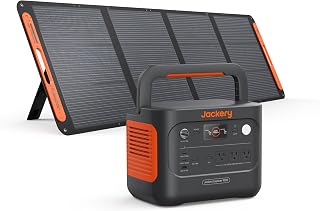
Jackery Solar Generator 1000 v2 and 200W Solar Panel,1070Wh,1500W AC
- At full output
- 43min
- Continuous output
- 1500W
- Surge
- 3000W
- Cells
- LiFePO4
- Solar input
- 200W
- Weight
- 24lb
Capacity
1,070Wh
High output · 500 – 1,200 Wh · 40 power stations
Energy per kilogram
99Wh per kg
+12% vs the 88 median — more energy for the weight than most of its class
Capacity is +7% against the class median of 1,000.
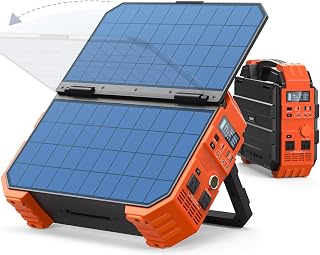
BLAVOR Portable Power Station 1600W (Peak 3200W), Built-in Solar Panel, 1024Wh LiFePO4 Battery, 100W USB-C Fast Charge, Solar Generator for Home Backup, Camping, Power Outages & RV
- At full output
- 38min
- Continuous output
- 1600W
- Surge
- 3200W
- Cells
- LiFePO4
- Solar input
- 40W
- Weight
- 26lb
Capacity
1,024Wh
High output · 500 – 1,200 Wh · 40 power stations
Energy per kilogram
87Wh per kg
-2% vs the 88 median — typical for its class
Capacity is +2% against the class median of 1,000.

VTOMAN FlashSpeed 1000 Portable Power Station, 828Wh LiFePO4,1000W output
- At full output
- 50min
- Continuous output
- 1000W
- Surge
- 2000W
- Cells
- LiFePO4
- Solar input
- 400W
- Weight
- 32lb
Capacity
828Wh
Appliance · 500 – 1,200 Wh · 40 power stations
Energy per kilogram
58Wh per kg
-35% vs the 88 median — heavier than most of its class for the energy
Capacity is -17% against the class median of 1,000.

DaranEner Portable Power Station 600W (1200W Peak), 576Wh LiFePO4 battery with 100W Solar Panel, Fast Recharge AC/Car/Solar, 3 AC Outlets, USB-C PD for Camping, RV, CPAP, Emergency Backup
- At full output
- 58min
- Continuous output
- 600W
- Surge
- 1200W
- Cells
- LiFePO4
- Solar input
- 100W
- Weight
- 14lb
Capacity
576Wh
Appliance · 500 – 1,200 Wh · 40 power stations
Energy per kilogram
93Wh per kg
+5% vs the 88 median — typical for its class
Capacity is -42% against the class median of 1,000.
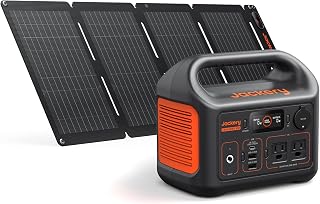
Jackery Solar Generator 300 and 40W Solar Panel,292Wh,300W AC
- At full output
- 58min
- Continuous output
- 300W
- Surge
- 600W
- Cells
- LiFePO4
- Solar input
- 40W
- Weight
- 13lb
Capacity
292Wh
Essentials · under 500 Wh · 42 power stations
Energy per kilogram
50Wh per kg
-33% vs the 74 median — heavier than most of its class for the energy
Capacity is +23% against the class median of 237.

ALLWEI Portable Power Station 300W, 256Wh Solar Generator LiFePO4 Battery
- At full output
- 51min
- Continuous output
- 300W
- Surge
- 600W
- Cells
- LiFePO4
- Solar input
- 100W
- Weight
- 6lb
Capacity
256Wh
Essentials · under 500 Wh · 42 power stations
Energy per kilogram
88Wh per kg
+19% vs the 74 median — more energy for the weight than most of its class
Capacity is +8% against the class median of 237.

300W Portable Power Station 80000mAh LiFePO4 Battery
- At full output
- 51min
- Continuous output
- 300W
- Surge
- not stated
- Cells
- LiFePO4
- Solar input
- 100W
- Weight
- 6lb
Capacity
256Wh
Essentials · under 500 Wh · 42 power stations
Energy per kilogram
87Wh per kg
+17% vs the 74 median — more energy for the weight than most of its class
Capacity is +8% against the class median of 237.
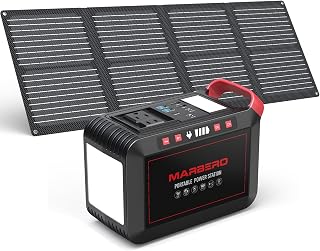
MARBERO 237Wh Solar Generator with Solar Panel Included Portable Power Station 300W Pure Sine Wave with Foldable Solar Panel 60W Set for Camping Outdoor Hiking Fishing Emergency
- At full output
- 47min
- Continuous output
- 300W
- Surge
- 375W
- Cells
- Lithium-ion
- Solar input
- not stated
- Weight
- 9lb
Capacity
237Wh
Essentials · under 500 Wh · 42 power stations
Energy per kilogram
58Wh per kg
-22% vs the 74 median — heavier than most of its class for the energy
Capacity is 0% against the class median of 237.

Portable Solar Generator, 300W Portable Power Station with 40W Solar Panel
- At full output
- 44min
- Continuous output
- 300W
- Surge
- 600W
- Cells
- Lithium-ion
- Solar input
- 40W
- Weight
- not stated
Capacity
220Wh
Essentials · under 500 Wh · 42 power stations
Energy per kilogram
Weight not stated, so energy per kilogram cannot be computed.
Capacity is -7% against the class median of 237.

DaranEner 300W Portable Power Station, 192Wh LiFePO4 Solar Generator
- At full output
- 38min
- Continuous output
- 300W
- Surge
- 600W
- Cells
- LiFePO4
- Solar input
- 60W
- Weight
- 6lb
Capacity
192Wh
Essentials · under 500 Wh · 42 power stations
Energy per kilogram
74Wh per kg
0% vs the 74 median — typical for its class
Capacity is -19% against the class median of 237.
Related
- The full power station finder — unfiltered, every output class.
- How we compile these figures.