

Power stations with solar input
Every station here publishes a solar input rating. That figure is a ceiling on how fast it refills — not a promise of independence.
Every figure here is taken from the manufacturer’s published listing and measured against the rest of the group. We do not test power stations. Where a listing is silent, this site prints not stated rather than a plausible default.
What this group looks like
| Measure | Middle half | Median |
|---|---|---|
| Capacity | 292 Wh – 2,083 Wh | 1,024 Wh |
| Continuous output | 300 W – 2,400 W | 1,200 W |
| Runtime at full output (derived) | 38 min – 1h 2m | 51 min |
| Energy per kilogram (derived) | — | 86 Wh/kg |
The middle-half column spans the 25th to 75th percentile, so it describes where most of this group sits rather than being pulled about by one unusual unit.
The runtime figure is arithmetic, and it is optimistic. It is the published capacity divided by the published output, which is the best you could ever get. Real inverters are 85 to 90% efficient, so the usable figure is lower — and no listing on this site states its inverter efficiency, so we do not estimate it. Treat the number as a ceiling and a way to compare like with like, not as a promise.
Against the market as a whole this group runs about as long at full output as average — a median of 51 min against 51 min overall.
What these listings publish
Specification coverage is uneven, and knowing where it runs out is part of shopping honestly.
| Specification | Stated | Share |
|---|---|---|
| Continuous output | 87 | 100% |
| Capacity in watt-hours | 71 | 82% |
| Surge rating | 40 | 46% |
| Cell chemistry | 66 | 76% |
| Solar input | 87 | 100% |
| Weight | 64 | 74% |
What they cost
Bands, not prices. Panels, where you need them, are almost always a separate purchase.
| Band | Listings | Share |
|---|---|---|
| Under $200 | 27 | 31% |
| $200–400 | 17 | 20% |
| $400–800 | 22 | 25% |
| $800–1,500 | 10 | 11% |
| Over $1,500 | 11 | 13% |
Do the arithmetic before you buy panels
A station accepting 200 W of panel gathers at best about a kilowatt-hour across a good day, and considerably less under cloud or with panels lying flat rather than angled at the sun. Refilling a 2,000 Wh station from empty on solar alone is a two-day job at that input. The input rating tells you the ceiling; the weather and the mounting decide what you actually get.
The panels are almost never included
A “solar generator” is a battery with a solar input. The panels are a separate purchase and frequently cost as much as the station. Any comparison that treats the listed price as the price of a solar setup is comparing the wrong thing.
MPPT and voltage windows matter more than the headline watts
A station will only accept panel voltage inside a stated window, and mismatched panels produce far less than their rating or nothing at all. Where a listing states an input voltage range it is worth more attention than the watt figure, and where it does not, this site says so.
What the solar input rating really tells you
The number on the listing is the maximum the charge controller will accept, not what any panel will deliver. Taking the median station in this corpus against its median rated solar input gives roughly five hours to fill from empty, and that figure assumes the panel is producing its rated output continuously. Real panels do not: output falls with angle, cloud, heat and dirt, and a realistic day yields a fraction of the nameplate. Doubling the theoretical figure is a better planning assumption than trusting it.
The panel is usually not included
Roughly half the stations here state a solar input at all, and a listing that does is describing a capability rather than a bundle. Panels are generally sold separately and cost a meaningful fraction of the station, and the connector, voltage window and maximum current all have to match. A panel outside the station’s voltage window will not charge it regardless of wattage, which is the most common reason a correctly sized panel does nothing.
Where solar earns its place, and where it does not
Solar makes sense where the station will be away from mains for days: it converts a fixed reserve into a renewable one, and that is a genuine change in what the station can do. For power cuts measured in hours it adds little, because the station starts full and the outage ends before recharging matters. Buying the panel for a use case that is really a weekend outage is the most common way this capability goes unused.
Charging from a vehicle, and the other slow options
Solar is one of several ways to fill a station away from mains, and it is not always the best. A 12 V car socket delivers a trickle that is useful over a long drive and negligible over a short one; some stations accept a much faster vehicle charge through a dedicated cable. Where the trip involves driving anyway, that route is more predictable than a panel, needs no siting and works in weather that makes solar useless. The two combine well, and buying only the panel is common enough to be worth questioning.
Reading the solar figure against the capacity
The useful comparison is not the rated solar input on its own but that figure against the station’s capacity, which is what gives the time to fill. A large station with a modest controller can take days of good sun to refill from empty, and a small one with a generous controller refills in an afternoon. Both appear on their listings as a solar capability. The ratio is the number worth computing before buying the panel, and it is not printed anywhere.
Before you buy
Check watts before watt-hours
A station rated below your appliance’s draw will not start it for one second, whatever its battery holds. Establish the output ceiling you need first; the capacity question only matters once the appliance runs at all.
Find the surge rating
Anything with a motor or compressor draws several times its running wattage for a fraction of a second at startup. Where a listing does not state a surge rating, this site says so rather than assuming it is generous.
Treat marketing language as a claim
“Solar generator”, “whole-home backup” and “portable” are positioning, not specifications. Look for the number behind each: a solar input in watts, an output in watts, a weight in kilograms.
Compare them
The finder below is already filtered to this group. Every result carries its runtime at full output.
170 power stations match

UDPOWER S2400 Portable Power Station(Solar Panel Option), 2083Wh LiFePO4, 2400W (Surge 3000W) UPS, 6 AC Outlets, Solar Generator for RVs Camping Emergency, Home Backup (One Unit(AS2400))
- At full output
- 52min
- Continuous output
- 2400W
- Surge
- 3000W
- Cells
- LiFePO4
- Solar input
- 440W
- Weight
- 41lb
Capacity
2,083Wh
High output · 1,200 – 2,500 Wh · 20 power stations
Energy per kilogram
112Wh per kg
+31% vs the 86 median — more energy for the weight than most of its class
Capacity is +3% against the class median of 2,016.

UDPOWER S1200 1190Wh Solar Generator Kit with 120W Panel, 1200W Power Station, for Home Backup RV Outdoor, Emergency Power Backup
- At full output
- 60min
- Continuous output
- 1200W
- Surge
- 1800W
- Cells
- LiFePO4
- Solar input
- 120W
- Weight
- 26lb
Capacity
1,190Wh
Appliance · 500 – 1,200 Wh · 40 power stations
Energy per kilogram
102Wh per kg
+15% vs the 88 median — more energy for the weight than most of its class
Capacity is +19% against the class median of 1,000.
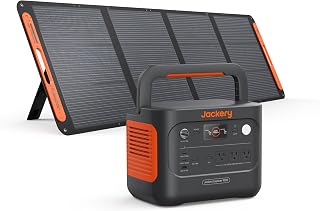
Jackery Solar Generator 1000 v2 and 200W Solar Panel,1070Wh,1500W AC
- At full output
- 43min
- Continuous output
- 1500W
- Surge
- 3000W
- Cells
- LiFePO4
- Solar input
- 200W
- Weight
- 24lb
Capacity
1,070Wh
High output · 500 – 1,200 Wh · 40 power stations
Energy per kilogram
99Wh per kg
+12% vs the 88 median — more energy for the weight than most of its class
Capacity is +7% against the class median of 1,000.
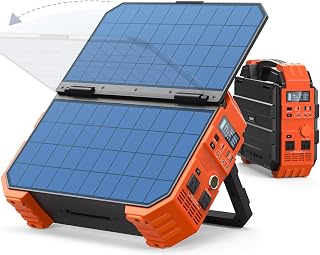
BLAVOR Portable Power Station 1600W (Peak 3200W), Built-in Solar Panel, 1024Wh LiFePO4 Battery, 100W USB-C Fast Charge, Solar Generator for Home Backup, Camping, Power Outages & RV
- At full output
- 38min
- Continuous output
- 1600W
- Surge
- 3200W
- Cells
- LiFePO4
- Solar input
- 40W
- Weight
- 26lb
Capacity
1,024Wh
High output · 500 – 1,200 Wh · 40 power stations
Energy per kilogram
87Wh per kg
-2% vs the 88 median — typical for its class
Capacity is +2% against the class median of 1,000.

VTOMAN FlashSpeed 1000 Portable Power Station, 828Wh LiFePO4,1000W output
- At full output
- 50min
- Continuous output
- 1000W
- Surge
- 2000W
- Cells
- LiFePO4
- Solar input
- 400W
- Weight
- 32lb
Capacity
828Wh
Appliance · 500 – 1,200 Wh · 40 power stations
Energy per kilogram
58Wh per kg
-35% vs the 88 median — heavier than most of its class for the energy
Capacity is -17% against the class median of 1,000.

DaranEner Portable Power Station 600W (1200W Peak), 576Wh LiFePO4 battery with 100W Solar Panel, Fast Recharge AC/Car/Solar, 3 AC Outlets, USB-C PD for Camping, RV, CPAP, Emergency Backup
- At full output
- 58min
- Continuous output
- 600W
- Surge
- 1200W
- Cells
- LiFePO4
- Solar input
- 100W
- Weight
- 14lb
Capacity
576Wh
Appliance · 500 – 1,200 Wh · 40 power stations
Energy per kilogram
93Wh per kg
+5% vs the 88 median — typical for its class
Capacity is -42% against the class median of 1,000.
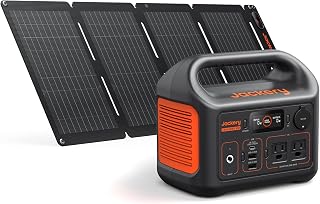
Jackery Solar Generator 300 and 40W Solar Panel,292Wh,300W AC
- At full output
- 58min
- Continuous output
- 300W
- Surge
- 600W
- Cells
- LiFePO4
- Solar input
- 40W
- Weight
- 13lb
Capacity
292Wh
Essentials · under 500 Wh · 42 power stations
Energy per kilogram
50Wh per kg
-33% vs the 74 median — heavier than most of its class for the energy
Capacity is +23% against the class median of 237.

ALLWEI Portable Power Station 300W, 256Wh Solar Generator LiFePO4 Battery
- At full output
- 51min
- Continuous output
- 300W
- Surge
- 600W
- Cells
- LiFePO4
- Solar input
- 100W
- Weight
- 6lb
Capacity
256Wh
Essentials · under 500 Wh · 42 power stations
Energy per kilogram
88Wh per kg
+19% vs the 74 median — more energy for the weight than most of its class
Capacity is +8% against the class median of 237.

300W Portable Power Station 80000mAh LiFePO4 Battery
- At full output
- 51min
- Continuous output
- 300W
- Surge
- not stated
- Cells
- LiFePO4
- Solar input
- 100W
- Weight
- 6lb
Capacity
256Wh
Essentials · under 500 Wh · 42 power stations
Energy per kilogram
87Wh per kg
+17% vs the 74 median — more energy for the weight than most of its class
Capacity is +8% against the class median of 237.
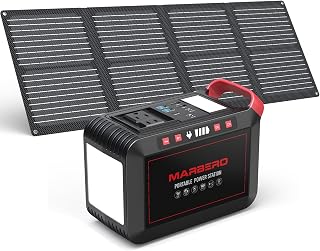
MARBERO 237Wh Solar Generator with Solar Panel Included Portable Power Station 300W Pure Sine Wave with Foldable Solar Panel 60W Set for Camping Outdoor Hiking Fishing Emergency
- At full output
- 47min
- Continuous output
- 300W
- Surge
- 375W
- Cells
- Lithium-ion
- Solar input
- not stated
- Weight
- 9lb
Capacity
237Wh
Essentials · under 500 Wh · 42 power stations
Energy per kilogram
58Wh per kg
-22% vs the 74 median — heavier than most of its class for the energy
Capacity is 0% against the class median of 237.

Portable Solar Generator, 300W Portable Power Station with 40W Solar Panel
- At full output
- 44min
- Continuous output
- 300W
- Surge
- 600W
- Cells
- Lithium-ion
- Solar input
- 40W
- Weight
- not stated
Capacity
220Wh
Essentials · under 500 Wh · 42 power stations
Energy per kilogram
Weight not stated, so energy per kilogram cannot be computed.
Capacity is -7% against the class median of 237.

DaranEner 300W Portable Power Station, 192Wh LiFePO4 Solar Generator
- At full output
- 38min
- Continuous output
- 300W
- Surge
- 600W
- Cells
- LiFePO4
- Solar input
- 60W
- Weight
- 6lb
Capacity
192Wh
Essentials · under 500 Wh · 42 power stations
Energy per kilogram
74Wh per kg
0% vs the 74 median — typical for its class
Capacity is -19% against the class median of 237.
Related
- The full power station finder — unfiltered, every output class.
- How long does a power station actually run? — the full table.
- How we compile these figures.